
Fractional Laser Acne Scar Treatment at Estetrend
At our clinic, acne scars are addressed with a combination of advanced technologies: Carbon Dioxide Fractional Laser, Erbium YAG Laser, Erbium Fractional Laser, and Microneedling Radiofrequency. Complete elimination of acne scars is not achievable, yet fractional laser therapy can significantly diminish their appearance without surgery. Typically, within three sessions, scars show substantial improvement — some disappear, others become narrower and shallower, pores tighten, and the overall skin texture refines. Sessions are generally spaced about one month apart.
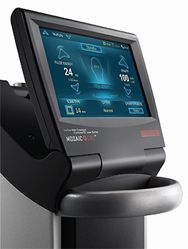
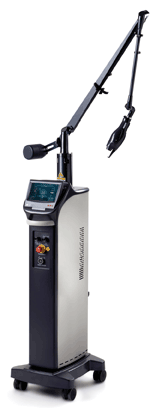
How ECO2 Carbon Dioxide Laser Stands Apart from Other Fractional Lasers
Laser wavelength is a key determinant of effectiveness, as it dictates penetration depth and therefore results. Er:Glass and Er:YAG systems operate at lower wavelengths, so their effects remain superficial. The CO2 laser, with its 10,600 nm wavelength, reaches the deepest layers of the dermis — the skin's middle layer — delivering unique outcomes and remaining the gold standard for skin tightening, resurfacing, rejuvenation, and all scar treatments. Early CO2 lasers were effective but carried side effects due to long pulse durations, deep peeling and thermal impact, and prolonged redness. Er:Glass lasers cause less surface trauma but offer weaker rejuvenation compared with CO2.
What Makes the ECO2 Fractional CO2 Laser Different from Other CO2 Fractional Lasers
Its fractional action does not rely on a lens as with other fractional devices; each laser pulse point is delivered individually within microseconds rather than all at once, reducing skin damage almost to zero.
- Smart pulse feature: each pulse consists of two parts — a strong, effective pulse in the first 20–30 microseconds, followed by a lower-power pulse for the remaining 150+ microseconds — minimising heat damage to surrounding tissue.
- Scanning feature: pulses are delivered separately and spaced apart, preventing heat buildup from closely placed pulses. The number, shape, and frequency of pulse points can be tailored to each skin's needs, boosting treatment flexibility and success.
- Ultra-thin pulse points: at 120 microns — roughly half the thickness of a hair — pulses reach the skin very precisely.
- Deep collagen response: CO2 application triggers an immediate 30% shortening of subcutaneous collagen fibres and sudden skin tightening, far beyond what Er:YAG and Er:Glass systems achieve.
- Customisable depth: treatment depth ranges from 10 to 250 microns depending on patient needs (versus 2–50 microns for Er:YAG and even shallower for Er:Glass).
These differences keep the CO2 laser the gold standard for skin resurfacing.
Skin Changes After Fractional CO2 Laser
Immediately after treatment, subcutaneous collagen fibres shorten by about 30%. Over the following one to three months, new collagen forms beneath the skin and connective tissue reorganises. The result is skin tightening (rejuvenation), a marked reduction in roughness, spots, and scars, and tightened pores — skin that looks 10–15 years younger.
Frequently Asked Questions
What Awaits Me Afterwards?
Estetrend remains by your side throughout the post-operative period. You can easily reach us with all your questions, and our expert doctors will respond promptly.
Contact Us